What your support made possible in 2025

First off… Thank you!
Many thanks to all who became COLA Partners by donating during COLA’s 2025 fundraising campaign to support COLA’s operations in 2026. The total amount raised for 2026 operations was $128,362 from 229 donors. Your generosity allows COLA to pursue its mission of protecting the water quality of Lac Courte Oreilles.
Below, are the results we achieved in 2025.
AIS Management Success Highlights
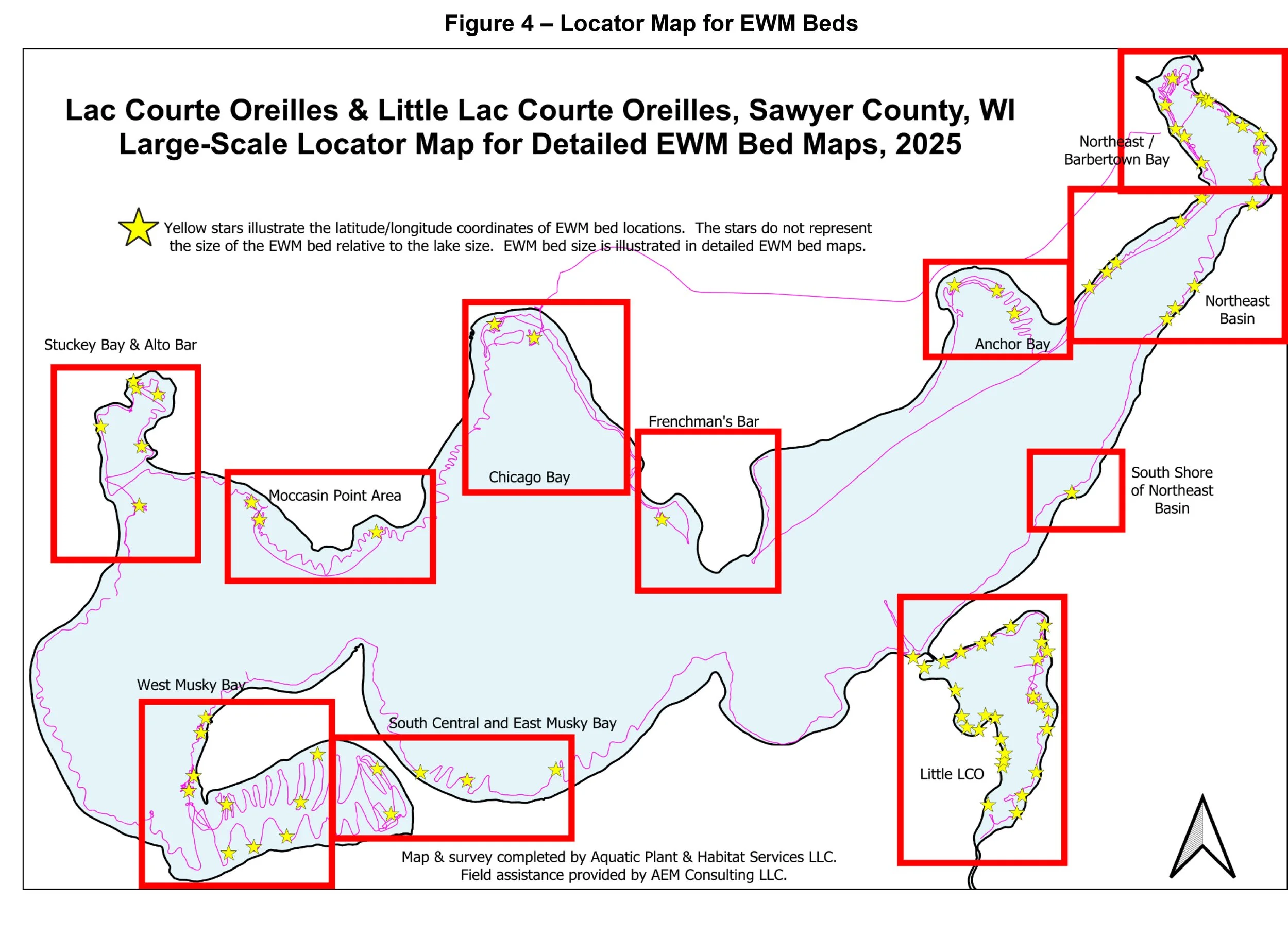
COLA partnered with Aquatic Plant Management (APM) to implement a strategy that yielded significant successes in controlling Aquatic Invasive Species (AIS).
Overall, 90% (21 out of 24) of the sites that received active management in 2025 met their success criteria.
Diver Assisted Suction Harvesting (DASH) & Hand Harvesting:
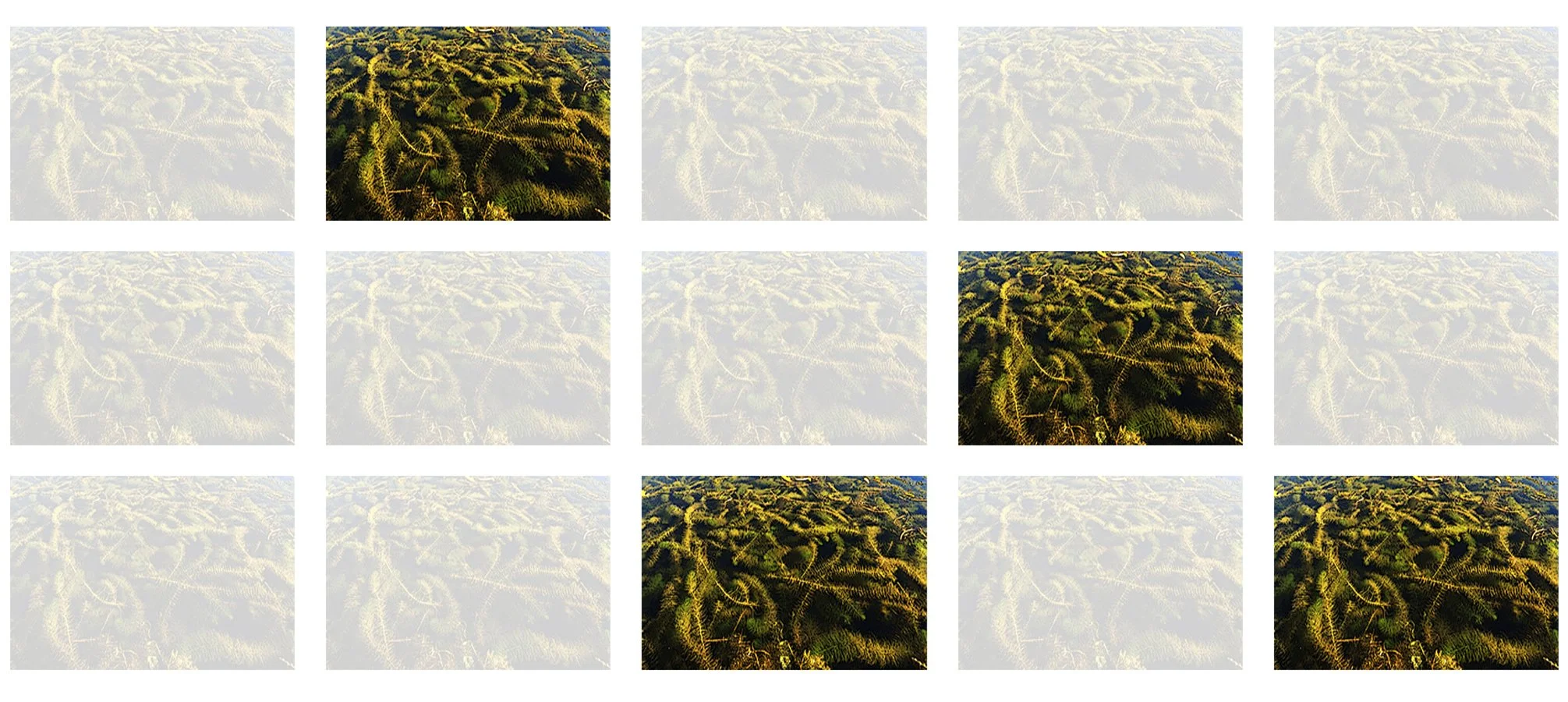
These manual methods were highly effective, reducing the number of targeted Eurasian Watermilfoil (EWM) beds from 15 …
…to 4, effectively eliminating 11 beds.
Herbicide Treatment (2,4-D):
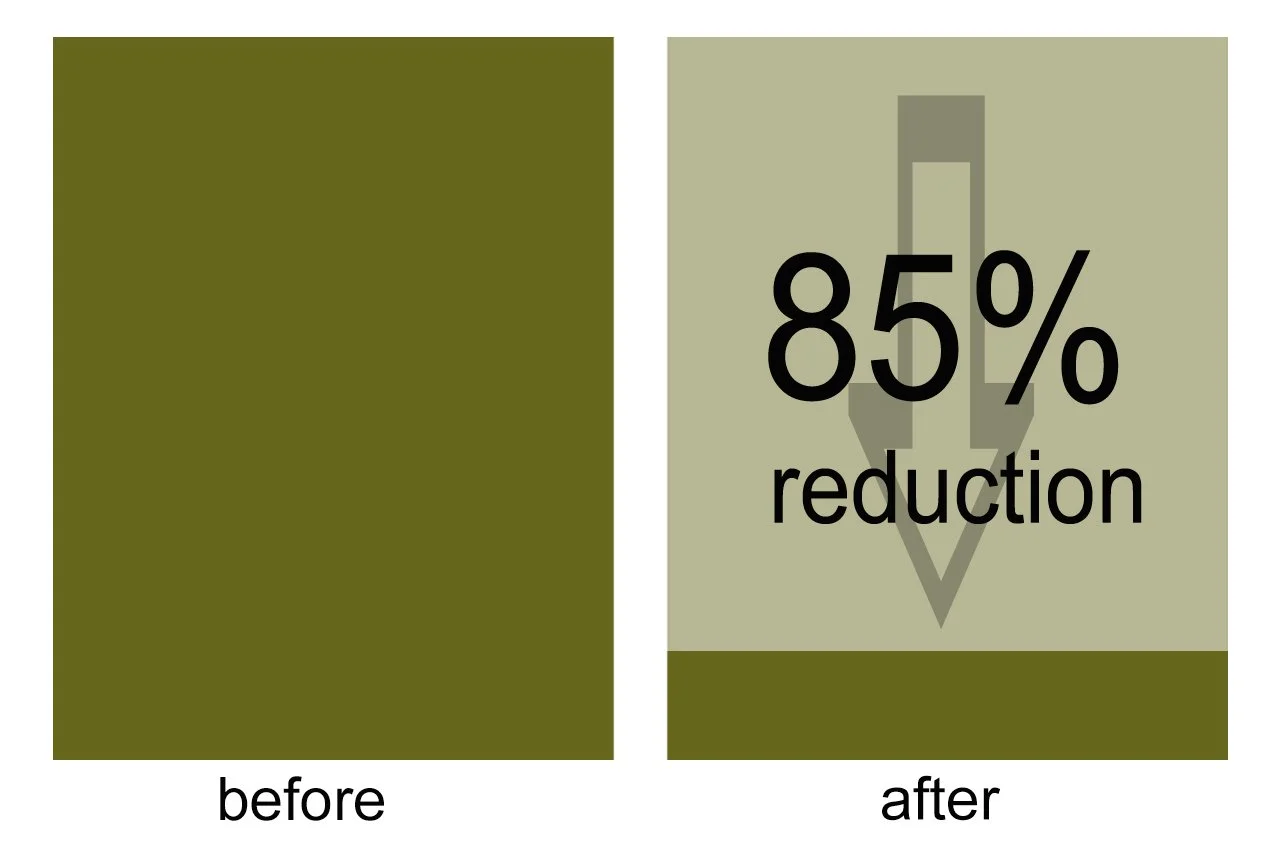
Managed at Moccasin Point, this treatment successfully reduced EWM biomass by 85% in the targeted area.
Mechanical Harvesting:
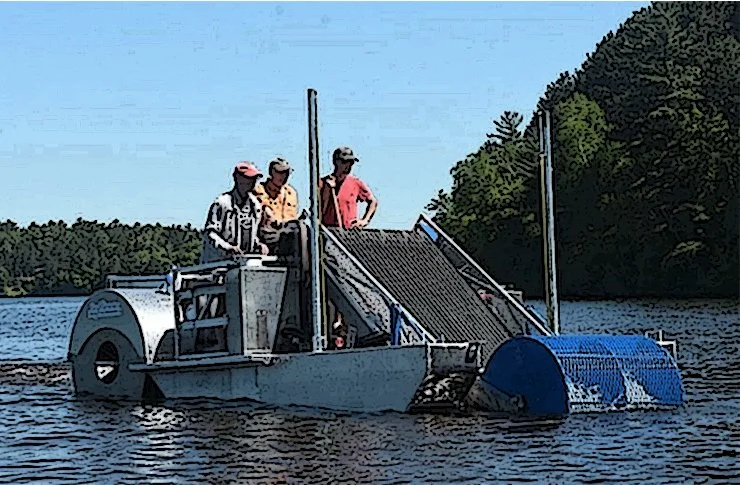
This approach provided critical seasonal navigational relief and access, particularly in the Barbertown Bay area.
Surveying and Mapping:
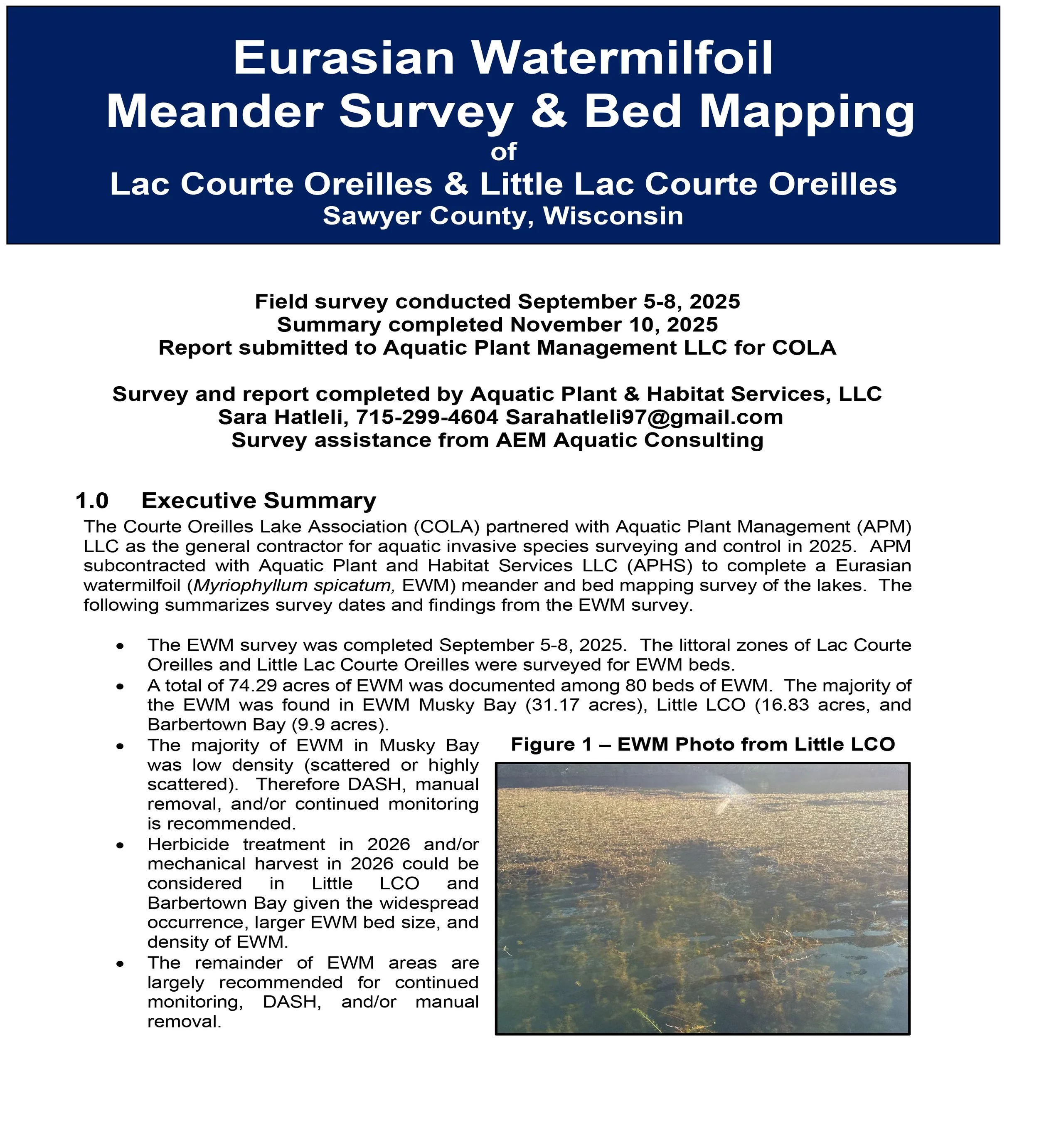
Comprehensive meander and bed mapping surveys were completed for both EWM and Curly-leaf Pondweed (CLP), providing a vital baseline for 2026 planning.
Lake Water Level:
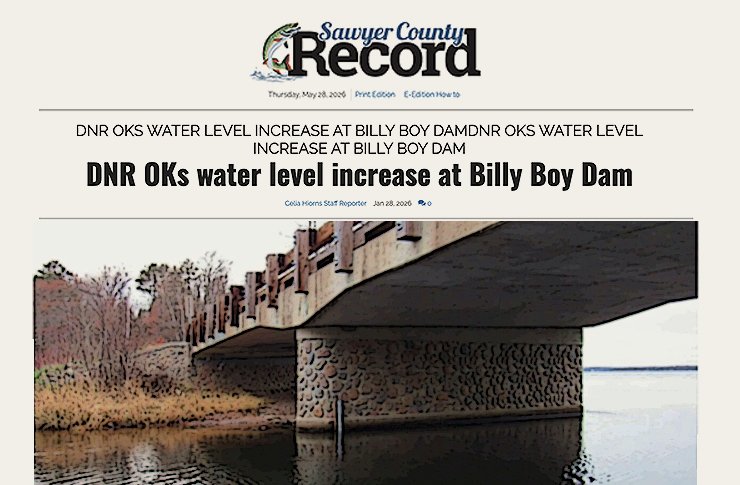
Through the efforts of COLA, Whitefish Lake Homeowners Group and the Grindstone Lake Association, the Wisconsin DNR issued an order to manage the Billy Boy Dam to raise water levels by a minimum of 6 inches, addressing long-standing navigational and ecological concerns.
Fisheries:
Working with Muskies Inc., a contest was held to promote taking Northern Pike from the lake, offering prizes for the most fish caught. Northern Pike are predators of young Muskies.

Communications:
Our Short Ears Long Tales (SELT) issues and email blasts went out regularly to inform and educate our members.